
Custom Study Room Design: Balancing Work Efficiency and Quiet Atmosphere
The study is an important space for home office, reading and learning. Many fixed furniture schemes fail to match personal usage habits, resulting in insufficient desktop area, messy cable arrangement and poor lighting cooperation. Customized study furniture can integrate desks, bookcases and storage areas into one set, building a stable and comfortable independent learning and working corner.
Common Custom Study Layout Schemes
| Layout Type | Space Requirement | Functional Richness | Feature Description |
| Single-side desk + wall bookcase | Small study | Medium | Simple layout, suitable for single user |
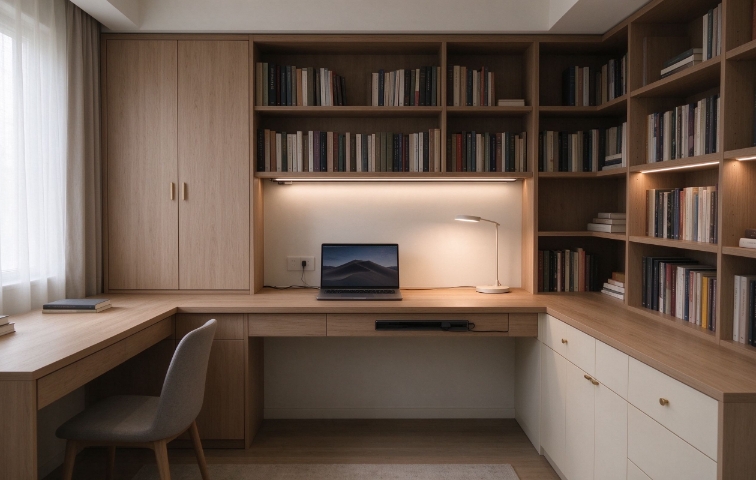
| L-shaped integrated desk | Medium study | High | Wider desktop, separate zones for office and reading |
| Wall-mounted folding study set | Multi-purpose spare room | Medium | Hide the desk when not in use, save space |
| Double side-by-side workstation | Large independent study | Very High | Support two people to work or study at the same time |
Common Pain Points of Ordinary Study Layout
- Books and documents are stacked randomly without classified storage, difficult to find quickly
- Unreasonable desktop height causes fatigue of the waist and cervical spine after long-time work
- No special cable hiding structure, messy wires affect visual comfort
- Insufficient local lighting, only relying on ceiling lamps leads to eye strain
Core Design Logic of Custom Study
The design takes the sitting posture and daily work content as the starting point. The frequently used books, tablets and stationery are placed within easy reach. Less frequently used books and archives are stored in high or closed cabinets. Closed cabinets help block dust, while open shelves are for frequently read books and decorations.
Humanized Functional Details
Reserve embedded cable troughs and hidden socket positions on the desktop. Adjustable desk height can be selected for users who alternate sitting and standing. Install silent soft-close hinges on cabinet doors to reduce noise during night reading. The open shelf can be matched with warm light strips to enrich the atmosphere and supplement local lighting.
Material and Layout Suggestions
Choose wear-resistant and scratch-resistant panel materials for the desktop. Avoid overly reflective high-gloss surfaces to prevent screen reflection. Keep a proper distance between the desk and the window to avoid direct sunlight shining on the display screen. If the study is adjacent to the bedroom, properly add sound-absorbing decorations and closed cabinet bodies to reduce noise transmission.