
Matching Skills of Color and Texture for Whole-Home Customization
Color and texture determine the overall temperament of customized home furnishings. Many homeowners encounter disjointed visual effects after installation because they only select single cabinet samples without considering the coordination of floors, wall paint, doors and soft furnishings. Scientific color matching and texture collocation can unify the space style, enhance the sense of hierarchy and avoid visual clutter.
Common Color Matching Modes for Custom Cabinets
| Matching Mode | Visual Effect | Applicable Style | Core Feature |
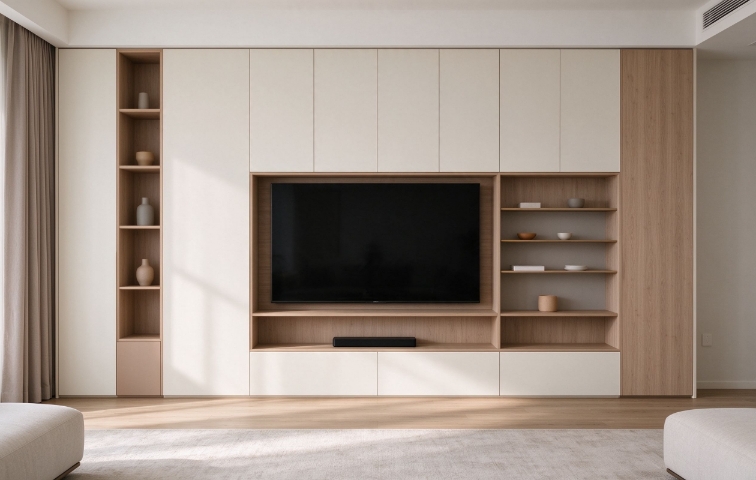
| Monochromatic unified matching | Simple and advanced | Minimalist, light luxury | Consistent tone, expanding spatial vision |
| Two-tone contrast matching | Layered and lively | Modern, light Chinese | Main color plus auxiliary color to avoid dullness |
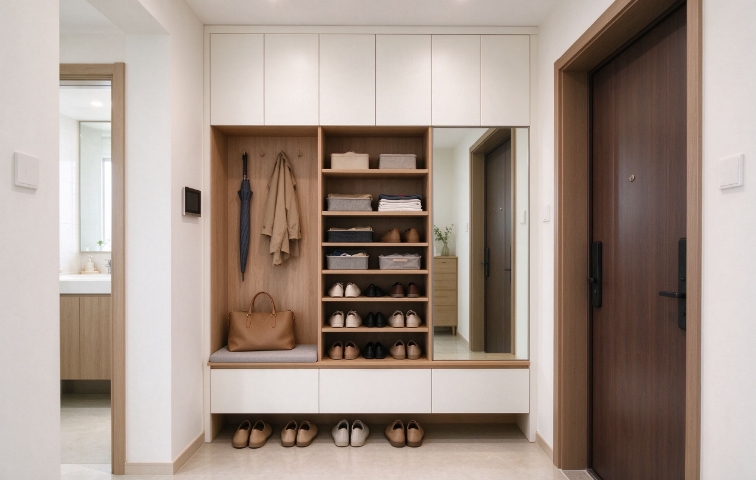
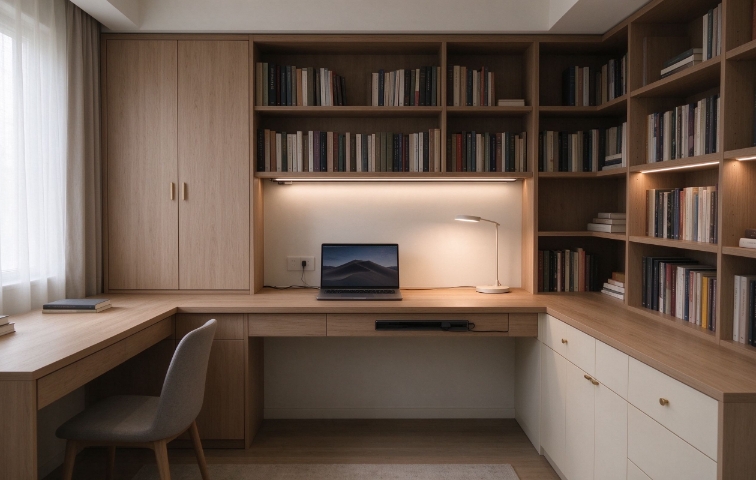
| Wood tone + plain color | Warm and comfortable | Japanese, Nordic | Natural texture softens cold hard decoration |
| Local accent color | Personalized and striking | Creative modern style | Small area embellishment, not easy to be visually tired |
Frequent Matching Mistakes in Home Customization
- Too many colors in one space, leading to messy vision and lack of main tone
- Ignoring the light difference between the showroom and the actual house, color deviation after delivery
- Mismatch of texture: rough wood grain and high-gloss panel used in large area at the same time
- Neglecting the coordination with floor and door cover, cabinets become isolated fragments in the space
The Influence of Light on Color Performance
The same panel will show different colors under warm yellow light, cold white light and natural daylight. Rooms with poor lighting are suitable for light-colored panels to brighten the space. Spaces with sufficient sunlight can properly use deep wood grain or low-saturation dark color to create a steady atmosphere. It is recommended to compare samples on site at different time periods.
Texture Collocation Logic
High-gloss panels are suitable for partial use in kitchens and entrance cabinets, easy to wipe clean. Matte panels are widely used in bedrooms and studies, with low light reflection and quiet texture. Natural wood grain can be used as the main material to bring warm breath. Try not to stack multiple strong textures in the same viewing surface.
On-site Confirmation and Implementation Tips
Determine the main color proportion first: the main color accounts for about 70%, auxiliary color 25%, and accent color controlled within 5%. Keep the handle style consistent with the panel texture. Before mass production, confirm the color sample together with the designer on site. After installation, adjust the soft furnishing such as curtains and sofa cushions to echo the cabinet tone.