
Sustainable Material Selection Trend in Modern Custom Home Design
More homeowners are prioritizing healthy, low-emission and eco-friendly materials when customizing their homes. Traditional panel products with excessive formaldehyde emission bring hidden risks to indoor air quality. Environmentally friendly raw materials and mature processing technologies have gradually become mainstream choices in the custom furnishing industry, balancing environmental protection, home health and texture aesthetics.
Comparison of Common Custom Panel Materials
| Panel Type | Environmental Grade | Surface Texture | Main Advantage |
| Particle board | Medium to high | Rich finish options | Cost-effective, stable structure |
| Plywood | Medium | Natural wood grain | Good bending resistance and toughness |
| Multi-layer solid wood board | High | Real wood touch | Low deformation rate, suitable for humid areas |
| Zero-formaldehyde substrate board | Premium | Simple and delicate | Ultra-low volatile organic compounds |
Core Concerns of Healthy Home Customization
- Harmful gas release: long-term formaldehyde and VOC emission affects indoor air quality
- Material stability: poor-quality panels are prone to swelling, warping and cracking under humidity changes
- Recycling performance: raw materials from sustainable forests reduce the carbon footprint of home renovation
- Adhesive and coating formula: water-based paint and environmental glue greatly reduce pollutant release
Design Matching Logic of Eco-Friendly Materials
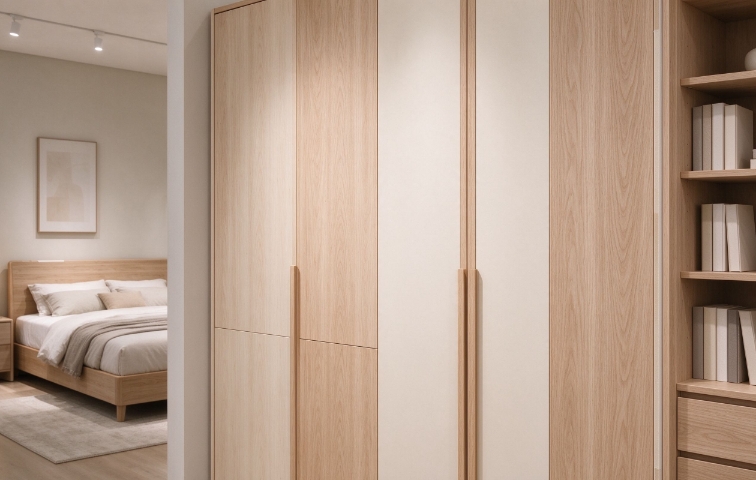
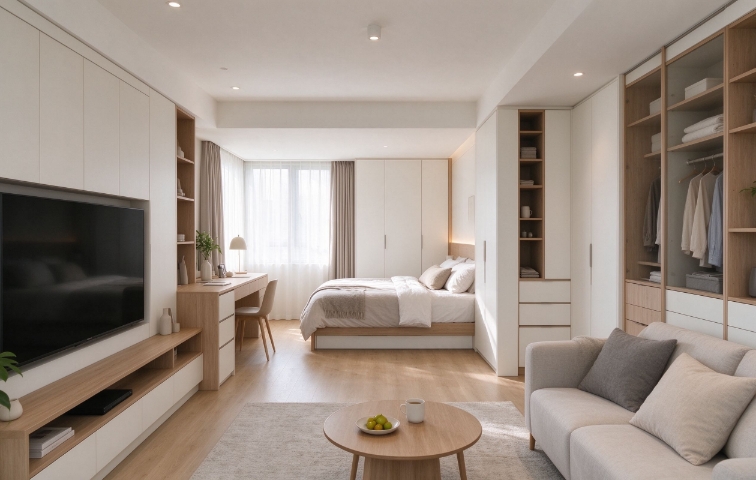
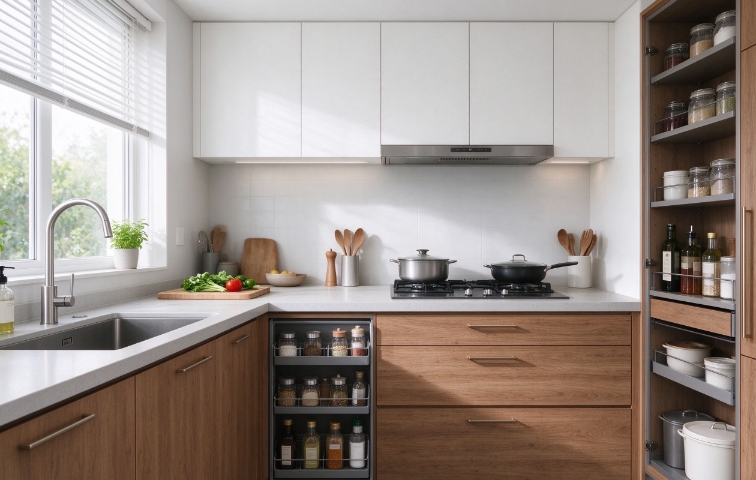
Eco-friendly materials are not only about environmental testing standards, but also need to match the household scene. Kitchen cabinets need moisture-proof and scratch-resistant substrates. Wardrobes and bookcases focus on stable deformation resistance. Children’s rooms give priority to zero-formaldehyde base materials with wear-resistant and impact-resistant surface treatment.
Common Misunderstandings of Material Selection
Many customers simply equate solid wood with environmental protection. Unqualified solid wood paint and glue will also produce pollutants. Meanwhile, high environmental protection grade does not mean no smell at all. Natural wood itself has unique plant odor, which is different from harmful chemical odor.
Acceptance and Maintenance Suggestions
Ask suppliers to provide official inspection reports of panels before delivery. After installation, maintain good ventilation for a period. Avoid long-term local water immersion on the board surface. Regularly check the sealing edge of cabinets; intact edge sealing is an effective way to block internal volatile gas release.